

About us
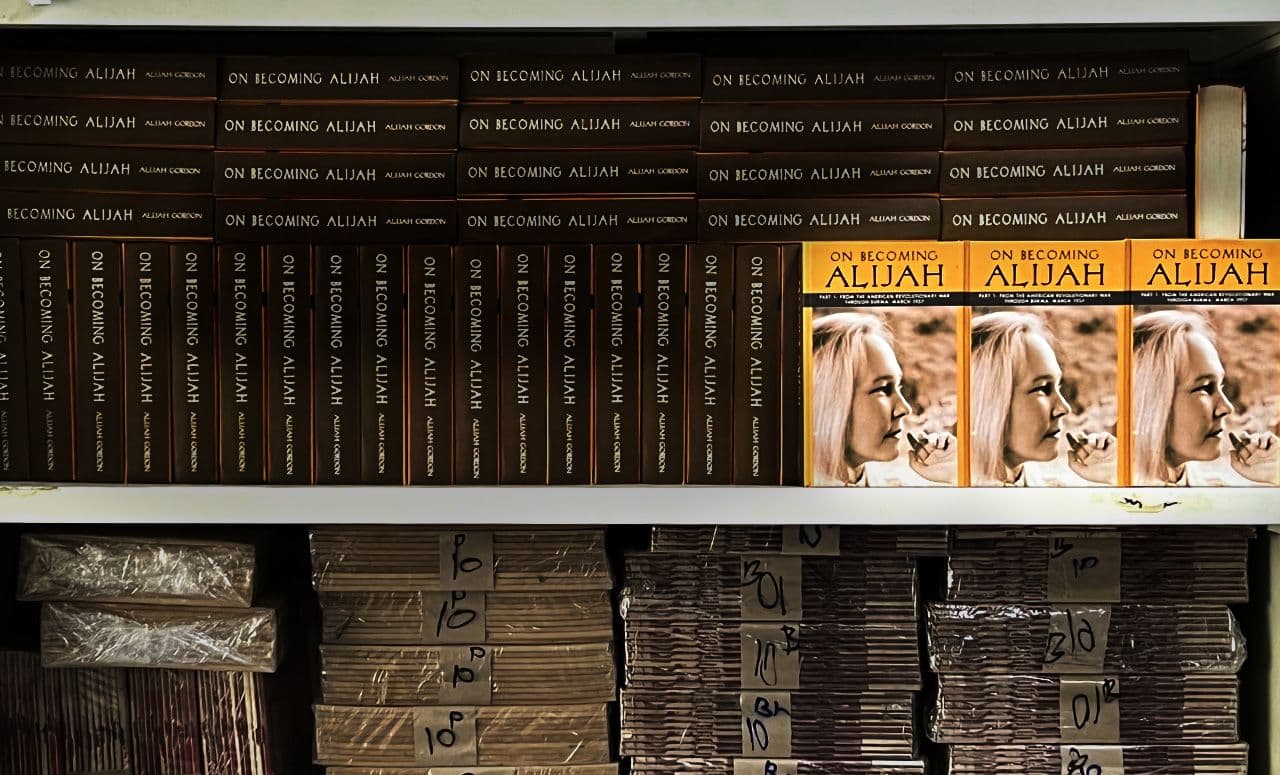
A Malaysian institute, working since 1959
Malaysian Social Research Institute (657776-U, 200401019273) was founded on 24 November 1959 by Dato' Dr Alijah Gordon. It is registered with the Registrar of Companies, Malaysia under the Companies Act 1965.
MSRI began as the Malaysian Sociological Research Institute. Its founding purpose was to publish and promote Malaysian culture and to help Malaysian authors publish works on Malayan culture, history, religion and customs.
In the 1970s the Institute undertook its first humanitarian project, sending several medical aid teams to refugee camps in Lebanon and establishing the Sponsor-a-Palestinian-child Programme. From there MSRI’s work moved steadily towards direct service.
Today MSRI is a non-profit organisation advocating for people who are poor, hungry, marginalised or politically under-represented, in local communities and beyond. We work to improve standards of living and to make a lasting impact through sustainable solutions, operating through grassroots projects and educational initiatives.
Alongside our work with Malaysian communities, we serve refugee and asylum-seeker communities whose countries of origin lie in the Middle East, Central Asia and Africa — including Afghanistan, Iraq, Palestine, Syria, Pakistan, Somalia, Sudan and Yemen. In total MSRI serves more than twenty refugee communities, while continuing its research and publishing work.
Vision
An institute of knowledge for conscientization and action towards promoting justice for vulnerable communities in Malaysia.
Mission
Undertake and support innovative ideas and impactful solutions on issues of social justice in Malaysia.
Scope of activities
MSRI sets out seven areas of focus for realising its objectives, published in full on its website. They are reproduced here so that funders and partners can see exactly what the Institute holds itself to.
Research and publication
Publishing printed or electronic materials — books, newsletters and journals — for general reading on current socio-economic issues.Intellectual discourse
Organising physical and virtual seminars, conferences, forums and other forms of discourse to find solutions to specific issues in Malaysia.Partnership and collaboration
Collaborating with local and international agencies on programmes of mutual benefit.Action research on education
Supporting action research and intervention for displaced and marginalised children in urban settings: trauma management, learning motivation, curriculum effectiveness, assessment instruments, teacher capacity building, e-learning effectiveness, and parental engagement.Research on protection
Supporting participatory research on protection for women and girls against sexual and gender-based violence and other forms of exploitation, aimed at enhancing community-based protection.Cash-based and in-kind assistance
Providing cash or in-kind support to communities in Malaysia facing temporary disruption to food, shelter and medical care.Scholarships
Providing partial or full scholarships for tertiary-level study in the social sciences.
Our history
Sixty-five years of research and service
A chronological record of how the Institute has changed. Where MSRI has not published a detail, that is stated rather than filled in.
- 1959
Founded in Kuala Lumpur
Dato’ Dr Alijah Gordon founds the Malaysian Sociological Research Institute on 24 November 1959, to publish and promote Malaysian culture and to help Malaysian authors publish works on Malayan culture, history, religion and customs.
- 1960s
A publishing institute
The Institute establishes itself as a publisher and a base for scholarship, at times operating from Singapore, where it works with researchers and editors on its earliest titles.
- 1970s – 1980s
First humanitarian work
MSRI sends several medical aid teams to refugee camps in Lebanon and begins the Sponsor-a-Palestinian-child Programme — the Institute’s first move from research into direct humanitarian service.
- 2003
Death of the founder
Dato’ Dr Alijah Gordon dies on 18 November 2003. MSRI continues and expands its work, increasingly focused on urban refugee support in Malaysia.
- 2004
Current legal registration
MSRI is registered with the Registrar of Companies under the Companies Act 1965 on 29 June 2004, under the registration numbers it still holds today.
- 2011
UNHCR implementing partner
MSRI states that it has operated as a UNHCR implementing partner since 2011, and formalises the Sahabat Education Programme for refugee children around this period.
- 2013 – 2020
Sahabat Health Programme
Primary healthcare, mental health support and referral services for refugee clients, supported by volunteer physicians, four certified counsellors and refugee interpreters.
- 2018 – 2021
Food aid at scale
The Sahabat Food Aid Programme issues smart cards allowing families to buy up to RM120 of groceries monthly. The MSRI Food Bank follows in 2021, reaching 700 clients during the pandemic lockdowns.
- 2019 – 2023
Women and Girls Protection Project
WAGAR provides safe spaces, case coordination, counselling, emergency funding and referrals for refugee women and girls, alongside training and male-ally capacity building.
- 2018 – 2020
Elham Empowerment Programme
Skills training, entrepreneurship coaching through the SEE Programme, and a low-cost goods market. The programme ends in 2020 owing to the pandemic and a lack of funding.
- 2023
EMAP and board renewal
MSRI begins the Enabling Men through Accountable Practices programme using the International Rescue Committee’s curriculum, and Tengku Mohamed Fauzi joins the Board of Governors.
- Today
Education, protection and food security
MSRI continues to serve refugee and asylum-seeker communities from the Middle East, North Africa and Central Asia — more than 20 communities — alongside some low-income and marginalised Malaysian families, and continues its research and publishing work.
Who we are
People
The Board is accountable for governance and financial management. The operational team delivers the programmes day to day, supported by refugee teachers, project personnel and volunteers.
Board of Governors
7 governors
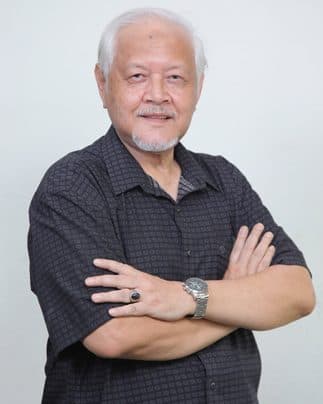
Dato’ Mohammed Ab Halim Ab Rahman
ChairmanSince 2016Biography
More than 35 years in diplomacy and international trade, including service as Malaysia’s Ambassador to Mexico and to Lebanon, and as Chief Executive Officer of the Malaysia External Trade Development Corporation (MATRADE). Also served as Malaysian Trade Commissioner in Brussels, Singapore and New York. Chairs the Board of Governors and works on governance, service priorities and partnerships.
mahalim@msri.org.my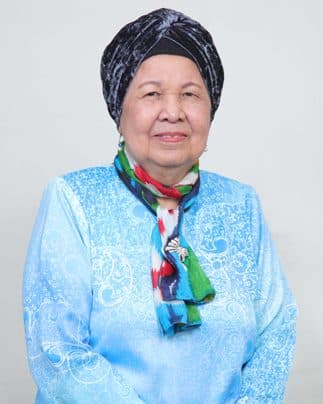
Puan Fatimah Haron
Treasurer and GovernorBiography
A retired academic with more than four decades in teacher training, developmental and educational psychology, gifted education and human services. Served at the Faculty of Education, University of Malaya (1981–2001) and the Department of Psychology, HELP University (2001–2021). Her association with MSRI dates to the late 1960s, when the Institute was based in Singapore and she worked with its founder. Oversees financial governance, transparency and accountability.
fatimah@msri.org.my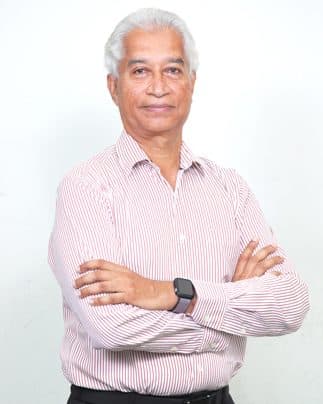
Dato’ Hishamudin Ubaidulla
GovernorSince 2003Biography
A corporate leader and community advocate with more than four decades in governance, strategic leadership and non-profit development. Holds a Bachelor of Economics (Hons) from the University of Malaya and an MBA from Lausanne, Switzerland. Director of Ubaidulla & Co Sdn. Bhd. and Trustee of Yayasan Ubaidi, and President of the Research and Information Centre on Islam (RICOI). Conferred the Darjah Johan Negeri (2015) and Darjah Setia Pangkuan Negeri (2020) by the State of Penang.
hisham@msri.org.my
Aliza Haryati Khalid
GovernorBiography
More than 20 years in corporate social responsibility, community development and non-profit work across Malaysia, Cambodia and Indonesia. Guides CSR direction at YTY Group under its Pillars of Goodness framework, and previously served as Executive Director of MSRI, overseeing programmes in education, protection and livelihoods. Earlier worked with the MyKasih Foundation. Provides guidance on organisational policy and resource mobilisation.
aliza@msri.org.my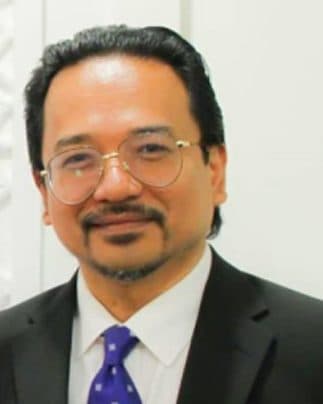
Khalek bin Awang
GovernorBiography
Co-Founder and Principal Partner of Khalek Awang & Associates, Advocates & Solicitors, with more than 22 years in legal practice. Previously a law lecturer at the International Islamic University Malaysia for five years. Holds a Master of Comparative Laws, a Bachelor of Laws, and a Postgraduate Diploma in Shariah Law and Practice from the International Islamic University Malaysia. Contributes legal expertise to governance and policy development.
khalek@msri.org.my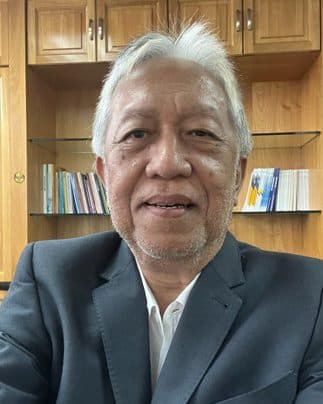
Tengku Mohamed Fauzi
GovernorSince 2023Biography
Four decades in legal practice specialising in corporate-commercial and intellectual property law, alongside senior corporate leadership roles. Served as Commissioner and Vice Chairman of the Human Rights Commission of Malaysia (SUHAKAM), overseeing business and human rights, sustainability, climate policy and international advocacy. President of the Malaysian Branch of the Royal Asiatic Society (MBRAS), a Council Member since 1993 and a former Honorary Treasurer. Contributes to policy oversight on research and partnerships.
tmfauzi@msri.org.my
Dr. Natasha MH
GovernorBiography
More than 25 years in education, specialising in curriculum design and creative communication. An abstract artist and published author who has held C-level roles across the education and corporate sectors. Holds a doctorate in organisational management focused on design and transformational leadership. Oversees matters relating to governance and education, and conducts training workshops that strengthen institutional capacity.
NatashaMH@msri.org.my
MSRI Team
4 posts
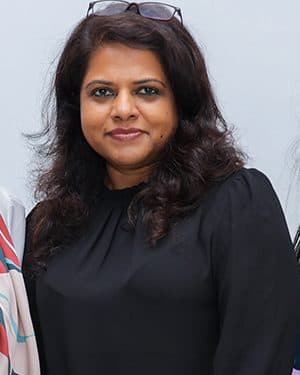
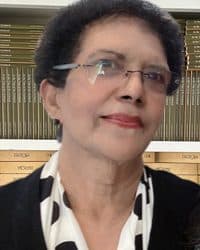
Andrea Fernandez
General Manager
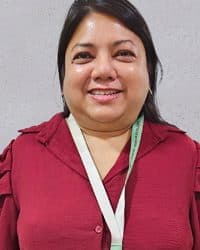
Alphonsa Maclean
Finance / HR Manager
Maria Moses
Accounts Executive
Vacant
Project Administrator
MSRI’s website lists this post without a name. We have not filled it in.
Teachers
Profiles being added
MSRI reports that its teaching is delivered by refugee teachers alongside its employed staff. Individual profiles are being added here; until they are, we have not listed names we cannot confirm.
MSRI reports that its team is supported by refugee teachers, refugee project personnel, volunteers and international interns. Team composition as reported in MSRI’s 2022 factsheet is set out on the impact page.
Organisation chart · 2022
How the Institute is organised
Reporting lines as published by MSRI on 4 October 2022. Click any area to expand it.
5 reporting areas · click one to see its roles
Executive Director
Refugee Programmes
Operations / Education Programme Manager
School Coordinator
Early Childhood Education
Primary EDU (Teachers)
Secondary EDU (Teachers)
Project Admin
Community Outreach / Educational SupportAl-Quran, Prep-class, Learn2Earn4Good, IT Class
Educators, IT Admin
Protection & Empowerment Project Manager
Protection against SGBV for Women & Girls (WAGAR)
Project Admin
Community Women Focal Points16 part-timers
Enabling Men through Accountable Practise (EMAP)
Certified EMAP Trainer / Supervisor
Project Admin
EMAP Community Facilitators16 part-timers
Fundraising & Special Projects
Graphic Designer
Content Writer
Admin & HR Manager
Office AssistantVacant
ReceptionistVacant
General Workers
Accounts Executive
Accounts Assistant
Research & Publications Coordinator
Research AssistantVacant
Reproduced as published. Programme staffing changes as programmes open and close, so this is a record of how MSRI was organised in 2022 rather than a current establishment list. Source: MSRI — Organisational Chart 2022.
Still publishing
Research and publishing remain part of the Institute’s work
MSRI continues to publish and to invite submissions from scholars, particularly on Malaysian culture, history, religion, customs and higher education.
Work with the Institute
MSRI collaborates with local and international agencies on programmes of mutual benefit. Whether you are a foundation, a corporate CSR team or an institutional partner, we would like to hear what you are trying to achieve.